


Piano Ballz Beat: Music Games
4.215.00 Reviews
App Specs
- Version
- 0.3.2
- Updated On
- License
- Free
- Downloads
- 1,000,000+
- Developer
- Cobby Labs
- Categories
- Music
- Platform
- Android
Screenshots


 Analysis by AppCompare
I’d approach Piano Ballz Beat: Music Games as a quick rhythm challenge rather than a substitute for a piano lesson or a deep music game. Its appeal is the direct link between steering a bouncing ball and keeping time with a track: you can understand the basic task quickly, then use each attempt to get a better feel for the timing. That makes it an easy choice when I have a few spare minutes and want something more active than simply listening to music.
A practical first session: learn the rhythm before chasing a score
My first useful habit would be to play a level with attention on the beat, not on how far I can get. The ball movement gives your hands an immediate job, and the visual motion can pull your eyes away from the timing. I find it helps to listen for the pulse first, then make smaller, deliberate adjustments rather than swiping reactively whenever the path changes. That approach is especially useful if a track feels faster than expected.
Because the controls are based on moving left and right, the game is approachable even if you have never played a rhythm game. Still, simple controls do not make every section effortless: following the path while matching the music asks for coordination. If I miss, I treat the attempt as a cue to identify whether I reacted late, moved too far, or lost the beat. That turns repetition into practice instead of a string of frustrated retries.
Small habits that make repeat attempts more useful
A repeatable routine is more helpful than trying to play every session at full intensity. I’d choose one track, settle into its pulse, and make a few focused attempts before switching to another. Changing songs too quickly can make it harder to notice what the previous attempt taught you; staying with one for a short stretch gives the timing a chance to become familiar. Then, when the movement feels predictable, I’d try to improve precision rather than simply finish.
It is also worth separating visual attention from musical attention. On an early attempt, watch the route closely enough to understand where the ball needs to go. On a later one, keep listening for the rhythm and use the visuals as guidance rather than the only signal. This is a practical way to make the game feel less like frantic steering. If you play with sound low or muted, the visual cues may still help, but the experience is built around music, so the timing challenge is easier to appreciate with audio on.
Where it fits among music games
Compared with a conventional piano-tile game, this is a more movement-oriented take on music play: you guide a ball along a route instead of focusing only on tapping keys as they appear. That difference gives it a distinct feel, though players who want to practise keyboard fingering or learn musical notation should choose a dedicated learning app instead. It is entertainment built around rhythm, not a piano tutor.
It also suits a different mood from a broad music library or a pure listening app. I would pick it when I want to interact with a song and test my coordination, not when I want complete control over what I hear or a long, uninterrupted playlist. The K-pop focus makes the game particularly appealing if that is already part of your listening rotation; someone looking for a carefully curated collection across many styles may prefer a music app designed for discovery.
Worth Reading Before You Choose

EA SPORTS FC Mobile 26 Is a Bigger Football Game, but It Takes Time

Flipboard Shows What News Apps Must Do Beyond the Feed

Switching to Android Auto Means Rethinking Your Driving Routine

Google Calendar Makes a Crowded Week Easier to Manage

Ludo King Makes the Most of the Minutes Between Plans

Baby Panda World Brings Quick Play to Modern Phones, but Its Game Library Feels Busy
Who will enjoy it—and who may want another option
I can see this working well for a casual player who likes music, short challenges, and the satisfaction of improving through retries. It can also be a nice low-commitment choice for a commute or a wait between errands, provided you can give the screen and the audio enough attention. A realistic routine might be playing one familiar song while waiting for a friend, then putting the phone away rather than letting a quick break turn into a long session.
On the other hand, I would skip it if I wanted a calm background game that asks for little concentration. The need to steer in time means it is a poor fit for situations where I should be watching my surroundings, and it is not something I would play while walking through a busy area. People who dislike replaying sections to improve timing may also find the central challenge repetitive. The same focused design that makes a clean attempt satisfying can feel narrow if you expect a large range of different activities.
One useful trade-off is to decide what you want from a session before opening the game. If the goal is a quick musical break, pick a familiar track and play for enjoyment. If the goal is to improve, repeat a section or level with one specific adjustment in mind—such as making a movement earlier or reducing unnecessary swipes. That gives each attempt a purpose without turning a casual game into homework.
The Beat Drops: Game Mechanics
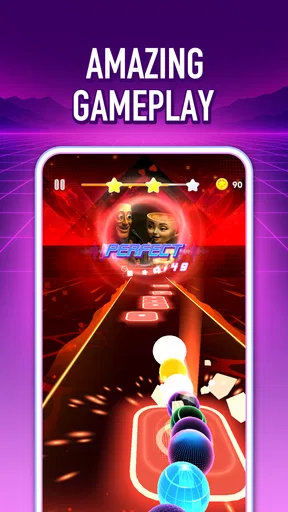
First things first, the core mechanic of Piano Ballz Beat: Music Games is delightfully simple yet surprisingly engaging. You’re tasked with guiding balls along a path to hit piano keys, all in time with catchy tunes. It sounds easy, right? Well, the game throws in enough twists and turns to keep you on your toes.
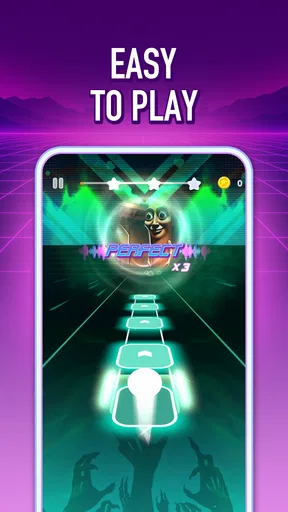
The controls are intuitive: you simply swipe to move the balls left or right. But the real challenge lies in keeping them aligned with the rhythm. Each track is uniquely designed, meaning you’ll need to adapt your strategy as you progress. Trust me, it’s a dance party for your fingers!
Visuals and Soundtrack: A Visual Symphony
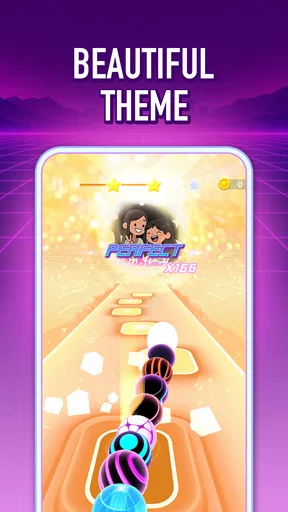
One of the standout features is its stunning visuals. The game boasts a vibrant and colorful interface that reacts to the music, creating an immersive experience. The design is sleek and modern, making each level feel fresh and exciting.
And let’s not forget the soundtrack! The game offers a diverse range of musical genres, from classical piano pieces to modern pop hits. The audio quality is top-notch, ensuring that every note is crystal clear. It’s like having a concert in your pocket.
Leveling Up: Progression and Challenges
As you advance through the game, you’ll face increasingly complex levels that test your timing and precision. There’s a satisfying sense of progression, with new challenges keeping the gameplay fresh. Plus, the app includes a leaderboard feature, so you can compete with friends or players worldwide. It’s a great way to add a competitive edge to your gaming experience.
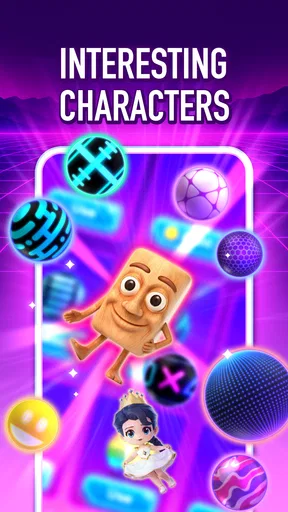
Another cool aspect is the customization options. You can unlock different ball designs and trails, allowing you to personalize your game. It’s a small touch, but it adds a layer of personalization that makes the game feel uniquely yours.
Why It Hits the Right Notes
What sets Piano Ballz Beat: Music Games apart from other rhythm games is its perfect blend of simplicity and depth. It’s easy enough for beginners to pick up, yet challenging enough to keep seasoned players coming back for more. The game’s dynamic visuals and fantastic soundtrack make each session a treat for the senses.
Whether you’re a casual gamer or a hardcore music lover, there’s something here for everyone. Its addictive nature means you’ll find yourself saying, “just one more level,” more often than you’d care to admit.
In practical terms, Piano Ballz Beat: Music Games is a free music game from Cobby Labs, rated for Everyone and available for Android devices running version 6.0 or later. Its current version is 0.2.6, and it has passed one million installs, with an average rating of 4.2 from around 1,200 ratings. Those figures suggest a sizeable audience, but they are not a substitute for deciding whether this particular style of rhythm play suits you. The game was released on January 12, 2026, and has 11 written reviews, so I’d focus more on the gameplay fit than on treating popularity as a guarantee.
When I compare it with other rhythm games, the main distinction is the combination of a ball route and piano-key targets. A tap-only game can be easier to read because your attention stays on incoming notes; here, the lateral movement adds another layer of coordination. That can make a successful run feel more physical and engaging, but it can also be less forgiving if you prefer predictable inputs. For a player who enjoys K-pop and wants a compact challenge, that trade-off is the point. For someone chasing broad song selection or music theory practice, a different category of app is likely to be a better match.
Check the setup that affects a session
Before settling into a longer play session, I’d check the phone’s sound level and make sure the game is comfortable to view. This is not about hunting for secret controls; it is about removing avoidable distractions. If the music is difficult to hear over a noisy environment, timing can become harder to judge. Headphones may help in a quiet, safe place, while the phone speaker is more sensible when I need to stay aware of what is around me. I would not use headphones in a situation where hearing nearby traffic or people matters.
I’d also keep the screen steady and use a grip that leaves both sides accessible for swipes. A small change in how I hold the phone can reduce accidental movement, especially when a section asks for quick corrections. If touch response feels inconsistent, I’d first clean the screen and avoid playing with damp fingers rather than assuming the level itself is unfair. Those are ordinary setup checks, but they matter in a game where small steering errors can disrupt a run.
Using progression without letting competition take over
The leaderboard can add a reason to revisit a track, but I would treat it as a personal reference rather than the main measure of whether I am enjoying the game. A useful loop is to make one attempt for familiarity, another to focus on a difficult transition, and then a final run where I stop overthinking and follow the music. If a score improves, that is satisfying; if it does not, I still get a clearer sense of which part needs attention. This keeps competition from turning every short session into a demand to beat someone else.
Customization has a similar role. Different ball designs and trails can make the play space feel more personal, but I would choose visibility over decoration if a busy visual effect makes the route harder for me to track. That is a small but practical trade-off: appearance is fun, while clear sightlines help with timing. I would change cosmetics between sessions rather than during a focused run, so I can tell whether a change in performance came from practice rather than from adjusting to a different look.
Limits to keep in mind before you commit
The game’s music-and-motion premise is also its boundary. It is not a substitute for an instrument, a metronome, or structured rhythm training, and a high score does not necessarily mean I have learned a transferable musical skill. The ball path can improve my attention and coordination in the moment, but someone preparing for lessons or trying to read notation should spend that time with tools built for those goals.
There is also a difference between a game that feels fresh for a few sessions and one that offers endless variety. The described appeal rests on navigating tracks, refining timing, and unlocking visual personalization; players who need frequent changes in genre or mechanics may eventually want a broader music game. I would consider that before downloading if I tend to lose interest once I have learned a central pattern. If I enjoy replaying a familiar challenge and shaving away careless movements, the repeated structure is more likely to feel rewarding than limiting.
For families, the Everyone age rating makes the game broadly suitable by content category, but I would still think about when and where a child plays. The timing focus can be absorbing, and it is sensible to set ordinary screen-time boundaries rather than rely on the game itself to end a session. For adults, the same advice applies in a different way: a quick break is useful only if it stays a break, so choosing a stopping point before opening the game can help.
Who should download it, and what to expect
I’d recommend giving it a try if K-pop, simple swipe controls, and score-chasing appeal to you, especially if you like learning a track through repeated attempts. It is also a reasonable pick for someone who wants a free, focused game rather than a large collection of unrelated modes. I would look elsewhere if I needed offline access, a specific song catalogue, precise difficulty controls, or a guaranteed way to practise piano; those needs call for features that should be checked in the app itself or for a different kind of product, rather than assumed from the premise.
That distinction answers the practical question of whether it works for a quick daily routine: yes, when you have a safe moment to look at the screen and listen, and when you are content with a short, concentrated challenge. A break at home or a quiet wait is a better fit than a noisy commute where you cannot hear the pulse. If you want a background activity that can be played without attention, this is not it.
So, if you’re ready to tap into a world where music and gaming collide, give Piano Ballz Beat: Music Games a try. It’s not just a game; it’s a symphony at your fingertips. Download it now and let the rhythm take you away!
Pros
- Engaging rhythm gameplay keeps players entertained.
- Wide range of music tracks to choose from.
- Simple controls suitable for all ages.
- Visually appealing with colorful graphics.
- Offline mode available for on-the-go play.
Cons
- Contains ads that can interrupt gameplay.
- Limited free songs; in-app purchases needed.
- Can be repetitive after extended play.
- High battery consumption during gaming.
- Occasional lag on older devices.
FAQs for Piano Ballz Beat: Music Games
What is Piano Ballz Beat: Music Games?
Piano Ballz Beat: Music Games is a rhythm-based game where players navigate balls to the beat of the music. It combines elements of piano playing with engaging visuals and challenging levels, making it suitable for both casual players and music enthusiasts looking for an interactive rhythm experience.
Is Piano Ballz Beat: Music Games free to play?
Yes, Piano Ballz Beat: Music Games is free to download and play on both Android and iOS platforms. However, the app may offer in-app purchases for players who wish to unlock additional features, levels, or remove ads to enhance their gaming experience.
What are the system requirements for Piano Ballz Beat: Music Games?
Piano Ballz Beat: Music Games requires a device running Android 5.0 or later, or iOS 10.0 or later. It is optimized for both smartphones and tablets, ensuring smooth gameplay. Sufficient storage space and a stable internet connection are recommended for optimal performance and updates.
Are there multiplayer options available in Piano Ballz Beat: Music Games?
Currently, Piano Ballz Beat: Music Games focuses on single-player gameplay. Players can enjoy various levels and challenges individually. While there isn't a direct multiplayer mode, sharing scores and achievements with friends can foster a competitive environment.
How can I improve my skills in Piano Ballz Beat: Music Games?
To improve your skills, practice regularly and start with easier levels to grasp the timing and rhythm. Gradually increase the difficulty as you become more comfortable. Utilizing the tutorial mode and watching online gameplay videos can also provide helpful tips and strategies.


